How Attachment Styles Shape Love in Relationships Today

You text someone, and they don't reply for a few hours, and suddenly your brain is writing a whole breakup speech. Or maybe it's the opposite — your partner wants to talk about "us," and your first instinct is to change the subject. Neither reaction is random. Both trace back to attachment styles in relationships, patterns we picked up as kids, long before we ever dated anyone, that quietly run the show in how we love, fight, and trust as adults.
Key Takeaways:
- Attachment styles can form pretty early in childhood and shape how we deal with closeness, how we react to conflict, and even how much we trust people.
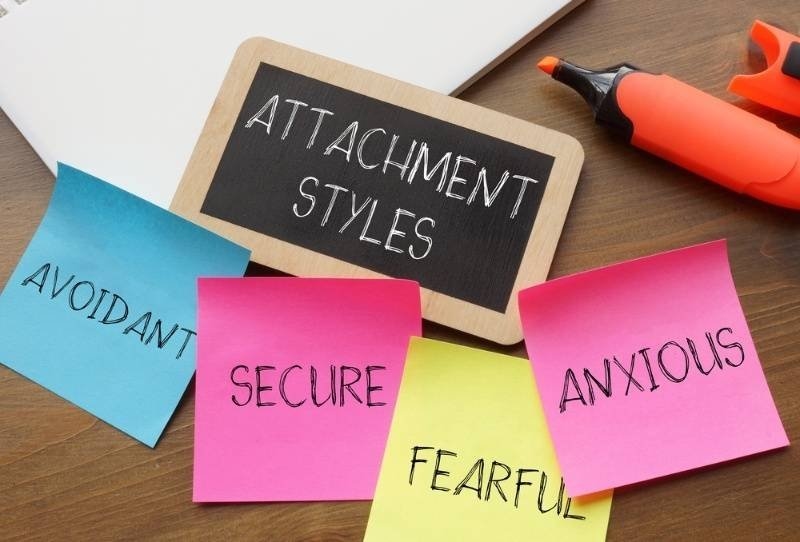
- Generally, you’ll hear about four styles: secure, anxious, avoidant, and disorganized.
- The anxious style tends to carry a fear of abandonment, plus this steady need for reassurance, like reassurance is always required.
- The avoidant attachment style leans more toward independence, but it often comes with less room for real closeness, even when closeness feels somewhat important.
- Then disorganized attachment mixes anxious and avoidant traits together, and it’s often linked to a childhood that was unpredictable or inconsistent in a way that messes with safety and stability.
What are Attachment Styles in Relationships?
Back in the 1950s, psychologist John Bowlby noticed something: how a child bonds with their caregiver isn't just about comfort, it's about survival. A few decades later, Mary Ainsworth took that idea further and mapped out the specific patterns kids fall into depending on how reliable — or unreliable — that early caregiving was.
Fast forward to adulthood, and that same wiring doesn't just switch off. It shows up in the small, everyday moments of a relationship:
- How relaxed do you feel when someone gets close to you
- What happens in your body when a partner pulls away
- How much reassurance actually feels like "enough"
- Whether trust comes easily or has to be earned inch by inch
None of this means you're broken or that your partner is impossible. It just means there's a pattern underneath the behavior, and patterns can be worked with.
Must Try: Simple Habits for a Happy Marriage: Strengthen Your Bond!
The 4 Different Attachment Styles in Relationships
Most people gravitate toward one main style, though it's completely normal to see shades of another, especially under stress.
Secure Attachment
This is the "boring" one in the best way. Securely attached people can be close to someone without losing themselves and can be apart from them without spiraling. They say what they need out loud instead of hinting at it, and a rough conversation doesn't feel like the end of the world.
Anxious Attachment Style in Relationships
If you've ever reread a text five times looking for hidden meaning, you know this one. The anxious attachment style in relationships often looks like:
- Needing reassurance more often than a partner naturally offers it
- Reading silence as rejection
- Feeling shaky when a partner wants some space
- Worrying, without much real evidence, that the relationship is about to fall apart
This usually isn't about being "too much." It's more likely the result of a childhood where love felt inconsistent — warm one day, distant the next — so the nervous system learned to stay braced for disappearance.
Avoidant Attachment Style in Relationships?
So what does the avoidant attachment style in relationships actually look like once you're past the surface? Less "doesn't care" and more "learned early that needing people didn't get them very far." In practice, that can mean:
- Pulling back right when things start to feel serious
- Going quiet instead of talking through emotions
- Genuinely preferring solo time over deep, vulnerable conversations
- Feeling boxed in when a partner wants more closeness
Often, this pattern started with a caregiver who wasn't especially responsive, so the child adapted by not needing much, because needing didn't seem to work anyway.
Disorganized Attachment Style in Relationships?
The disorganized attachment style in relationships — sometimes called fearful-avoidant — is the messiest to describe because it's genuinely a push-and-pull. Wanting someone close, then panicking once they are. This pattern tends to trace back to a childhood where the person who was supposed to feel safe also, at times, felt frightening or unpredictable.
In adult relationships, it can look like sending mixed signals without meaning to or wanting connection and bracing against it in almost the same breath.
How do Relationship Attachment Styles Affect Your Love Life?
These patterns aren't just about who you swipe right on. They shape the actual texture of a relationship:
- How you talk to each other: Secure partners tend to just say what they mean. Anxious or avoidant partners often either over-explain or go silent instead.
- How fights end: An anxious partner may want to fix things right away, while an avoidant partner needs a minute to breathe — which can feel like being shut out, even when it isn't meant that way.
- How much trust feels possible: For someone with disorganized attachment, closeness itself can feel risky, not just the relationship.
- Who you're drawn to: People often gravitate toward partners whose attachment style feels familiar, even when "familiar" isn't especially healthy.
None of this is about pointing fingers. It's about finally having a name for the argument you and your partner seem to keep having on a loop.
How to Build a Secure Attachment Style Together?

Here's the genuinely good news: attachment patterns aren't a life sentence. Researchers call the shift toward healthier patterns "earned security," and it's more accessible than it sounds.
- Notice it in real time: Just thinking "oh, this is the anxious spiral" or "I'm about to shut down" creates a beat of space before you react on autopilot.
- Say the actual thing: Skip the testing, the hinting, the silent treatment. Try just telling your partner what you need.
- Learn to self-soothe: The less you need your partner to manage your anxiety for you, the calmer the whole relationship gets.
- Talk to a therapist: Attachment-focused therapy is genuinely good at helping people untangle where these patterns came from.
- Notice who you're choosing: A patient, securely attached partner can actually help someone less secure feel safer, simply through consistency over time.
None of this happens overnight. It's less about one big breakthrough and more about a hundred small, boring, repeated choices to respond differently than your instincts tell you to.
Final Thoughts
Attachment styles in relationships explain a lot — why certain fights feel familiar, why closeness feels easy with one person and terrifying with another. But explaining isn't the same as excusing, and it definitely isn't the same as being stuck. Whether you see yourself in the anxious, avoidant, or disorganized pattern, the real work starts with just noticing it out loud, ideally with a partner who's willing to notice their own side too.
Also Read: Wedding Floral Traditions for Timeless Ceremony Style Ideas!
FAQs
1. What are the main attachment styles in relationships?
Four: secure, anxious, avoidant, and disorganized (also called fearful-avoidant). Each one reflects a different way of handling closeness, trust, and conflict.
2. Can an anxious attachment style in relationships actually change?
Yes. It's not quick, but with self-awareness, honest communication, and often therapy, people do shift toward a more secure way of relating, even after years of anxious patterns.
3. Does an avoidant attachment style in relationships mean someone doesn't care?
Not really. It usually reflects discomfort with vulnerability, not a lack of feeling. Think of it as a learned coping habit rather than proof of indifference.
4. What usually causes a disorganized attachment style in relationships?
It tends to develop from a childhood where caregiving felt inconsistent or even a little frightening — where the same person offering comfort was also, at times, a source of stress.
5. How can I figure out my own attachment style?
Pay attention to how you act when a relationship gets close and how you act when there's distance. That's usually where the pattern shows up first. A therapist or a structured attachment questionnaire can help pin it down more precisely.
This content was created by AI