How Much Is the Average Wedding Cost in 2026? Budget Tips


Key Takeaways
- Expect roughly $36,000 for the average wedding cost in 2026, based on Zola data shared by Fidelity.
- Venue and catering eat more than 40% of a typical wedding budget.
- Wedding costs by state vary hugely, from about $18,100 in Kansas to over $65,000 in New York.
- Almost three in four couples overspend, so set aside a 10% cushion early.
- A smaller guest list, an off-season date, and firm priorities trim wedding expenses fast.
Getting engaged feels like floating. Then someone asks about the budget, and suddenly you're staring at a spreadsheet.
So what does the average wedding cost these days? More importantly, how much of that number can you actually change?
This guide covers national figures, state ranges, and a plain wedding cost breakdown. No jargon, no scare tactics. Just numbers you can use before the first deposit leaves your account.
What Is the Average Wedding Cost in 2026?
Plan on about $36,000. That's the figure Fidelity pulls from Zola data for couples marrying in 2026, and it's up roughly $3,000 in a single year. Ouch. Still, it's an average, so your own number could land well above or below it.
1. How Much Does an Average Wedding Cost Nationally?
Zola puts the national figure near $36,000. Across more than half the country, though, couples land somewhere between $20,000 and $35,000. So how much does an average wedding cost where you live? It depends on location, guest count, and the season you pick, and each of those gets its own section below.
2. Average Wedding Price and Overspending Trends
Almost nobody sticks to the original plan. Zola surveyed couples who married in 2024, and nearly three-quarters said they spent more than they'd budgeted. The average wedding price keeps creeping up, and extras sneak in everywhere. Funny thing, though: 95% of those couples still called it worth the money.
Must Read: Big Wedding vs Small Wedding: Which One is Right for You?
How Much Does a Wedding Cost in the US?
National averages smooth over a lot of mess. The average wedding cost in the US is near $36,000, but a couple in Manhattan and a couple in Wichita aren't shopping in the same market. Where you marry sets the tone for almost every price you'll see.
1. Average Wedding Cost in the US: High and Low Regions
The average cost of a wedding runs highest in places like New York, New Jersey, and Massachusetts, where incomes are higher too. Oklahoma, Kansas, and Utah sit near the bottom. One California DJ company owner quoted by Fidelity says Bay Area couples often spend around $50,000, and venues alone can hit $25,000.
2. US Wedding Cost: Why Do Prices Differ?
US wedding costs shift with your guest count, the season, and even the weekday. Saturday nights from May through October are the priciest slots, because everyone wants them. Book a Sunday or a weekday instead, and venues often get more flexible. It never hurts to ask.
Wedding Cost by State
Location can move your total more than almost any single choice. The table below lists ten states and their typical ranges, based on Zola data that Fidelity summarises. Don't treat them as promises. Vendors in the same state can price very differently.
| State | Average Cost Range |
| New York | 43,400–65,100 |
| Wyoming | 41,000–61,500 |
| Nevada | 36,600–54,800 |
| California | 34,500–51,700 |
| Massachusetts | 34,100–51,100 |
| Illinois | 32,000–48,000 |
| Texas | 25,400–38,100 |
| Florida | 25,200–37,800 |
| Oklahoma | 18,900–28,300 |
| Kansas | 18,100–27,100 |
What Is the Average Cost of a Wedding by State?
New York sits at the top with $43,400 to $65,100. That's far above the national number. Wyoming and Nevada come next, and California and Massachusetts aren't cheap either. Kansas, Oklahoma, and Utah anchor the other end, with ranges that start below $20,000. Quite a gap, right?
Wedding Cost Breakdown: Where Does the Money Go?
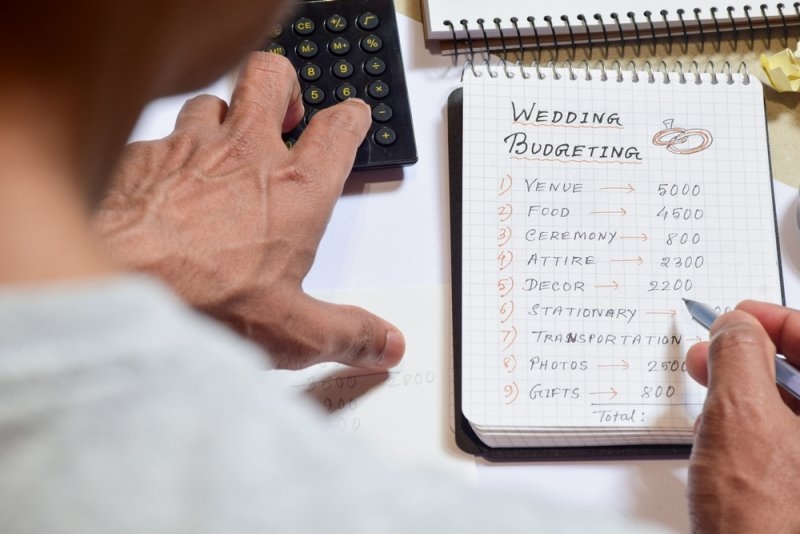
A good wedding cost breakdown shows who gets paid the most. The table uses a $36,000 total, with percentages from Zola data reported by Fidelity. Read it once, then ask yourself which line you'd happily shrink so another one can grow.
| Expense | Share of Budget | Approximate Cost |
| Venue | Nearly 24% | About $8,600 |
| Catering | About 19% | About $7,000 |
| Photo or video | Up to 12% | 4,000–4,400 |
| Wedding planner (if hired) | About 11% | About $4,000 |
| Attire | 8–10% | 2,880–3,600 |
| Entertainment | About 4.5% | About $1,600 |
| Invitations, cake, officiant | 2–3% | 700–1,100 |
1. Venue and Catering: The Two Biggest Wedding Expenses
Venue and catering together eat up more than 40% of a typical wedding budget. That's why they come first. A Sunday or off-season date can trim venue fees. Watch the fine print, though. Many venues set a guest minimum, and per-head pricing can quietly inflate your catering bill.
2. Photography, Music, Flowers, and Attire
Photo and video coverage can swallow up to 12% of the total, so decide what you truly need. A DJ or band averages around $1,600. Attire runs $2,880 to $3,600 for two people, accessories included. As for flowers, go seasonal and local. Rare blooms that travel far cost more.
3. Hidden Wedding Expenses to Plan For
Invitations, cake, and an officiant look tiny next to the venue bill, but together they take about 2–3% of your spending. Then come tips, extra décor, and last-minute changes. Wedding pros suggest adding roughly 10% on top of your total. Trust them. In the future you will be grateful.
Top Pick: Wedding Planner vs Coordinator: What to Choose for an Event?
How Much Should You Budget for a Wedding?
Your wedding budget should start with real money, not wishful thinking. Look at your savings, your income, and any help from family. Then compare that total with the national numbers above. Talk openly with everyone who's contributing, because money surprises feel worse than the actual costs.
1. How to Set a Wedding Budget in 4 Steps
Four steps keep this simple, and you can finish them in one evening.
- Add up your savings, monthly contributions, and any family gifts.
- Choose your top three priorities, such as food, photos, or the venue.
- Divide your total using the percentages in the table above.
- Hold back a 10% cushion for tips and surprises.
2. Smart Ways to Lower Wedding Expenses
You don't need to cut everything. A few well-chosen swaps do most of the work.
- Keep the guest list tight, since most costs grow with every invite.
- Ask a talented friend to handle the cake, the invitations, or the photos.
- Hire newer vendors or students, who often charge less than seasoned pros.
- Pick a Sunday, a weekday, or an off-season date.
Conclusion
The average wedding cost sounds huge, but you hold more control than you think. Start with $36,000 as a benchmark, then check your state's range. Pick three things that matter most and protect them. Add a 10% cushion, track every payment, and plan a day that fits your life, not just a trend.
Frequently Asked Questions
What is the average wedding cost in 2026?
Most estimates put it near $36,000, based on Zola data that Fidelity summarises. Your own total will shift with location, guest count, season, and vendors, so treat that figure as a starting point.
How much should you budget for a wedding?
Budget only what you can pay without taking on debt, then compare it with the $36,000 national benchmark. Add a 10% cushion for vendor tips, décor changes, and the surprises that always appear.
What is the average cost of a wedding by state?
It swings a lot, from $18,100–$27,100 in Kansas to $43,400–$65,100 in New York, per Zola. More than half the country lands between $20,000 and $35,000, so check your own state's row in the table above.
What is the biggest wedding expense?
The venue and catering, by a wide margin. Together they take more than 40% of the typical budget, and the venue alone often claims nearly a quarter, around $8,600 on a $36,000 wedding.
How can you lower your wedding cost without losing quality?
Shrink the guest list first. Then pick a weekday or off-season date, and ask talented friends to help with small jobs. Choose your top three priorities and let everything else stay simple.
This content was created by AI